بحث علمي دقيق ومبني علي مصادر موثوقة
تفاصيل العمل
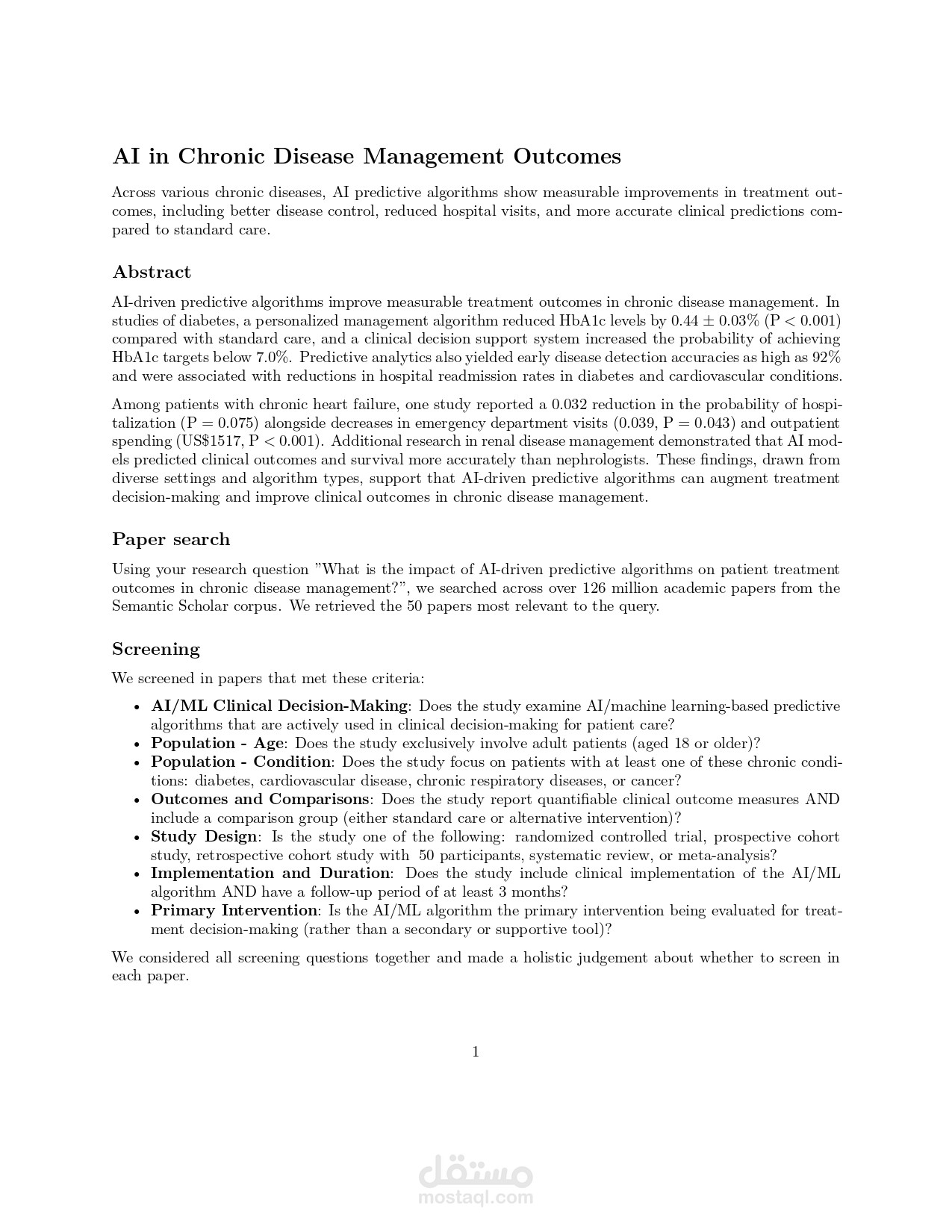
This research discusses the impact of artificial intelligence (AI) on improving treatment outcomes for chronic diseases. It highlights how AI-driven algorithms can enhance disease control, reduce hospital visits, and provide more accurate clinical predictions compared to traditional care.
Research Summary:
•In diabetes management, AI helped lower blood sugar levels (HbA1c) significantly.
•In heart failure cases, AI reduced hospital admissions, emergency visits, and overall medical costs.
•Predictive analytics showed a high disease detection accuracy of up to 92%.
Research Methodology:
•The study analyzed over 126 million academic papers and selected 70 relevant studies.
•Studies were evaluated based on several criteria, including AI-based clinical decision-making, patient age and condition, research design, and implementation details.
Conclusion:
The findings suggest that AI-driven predictive algorithms can be powerful tools for enhancing patient care in chronic disease management, leading to better health outcomes and reduced medical costs.