NLP sentiment analysis for customers reviews
تفاصيل العمل
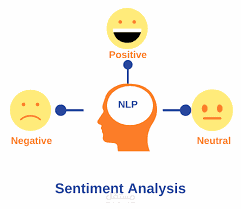
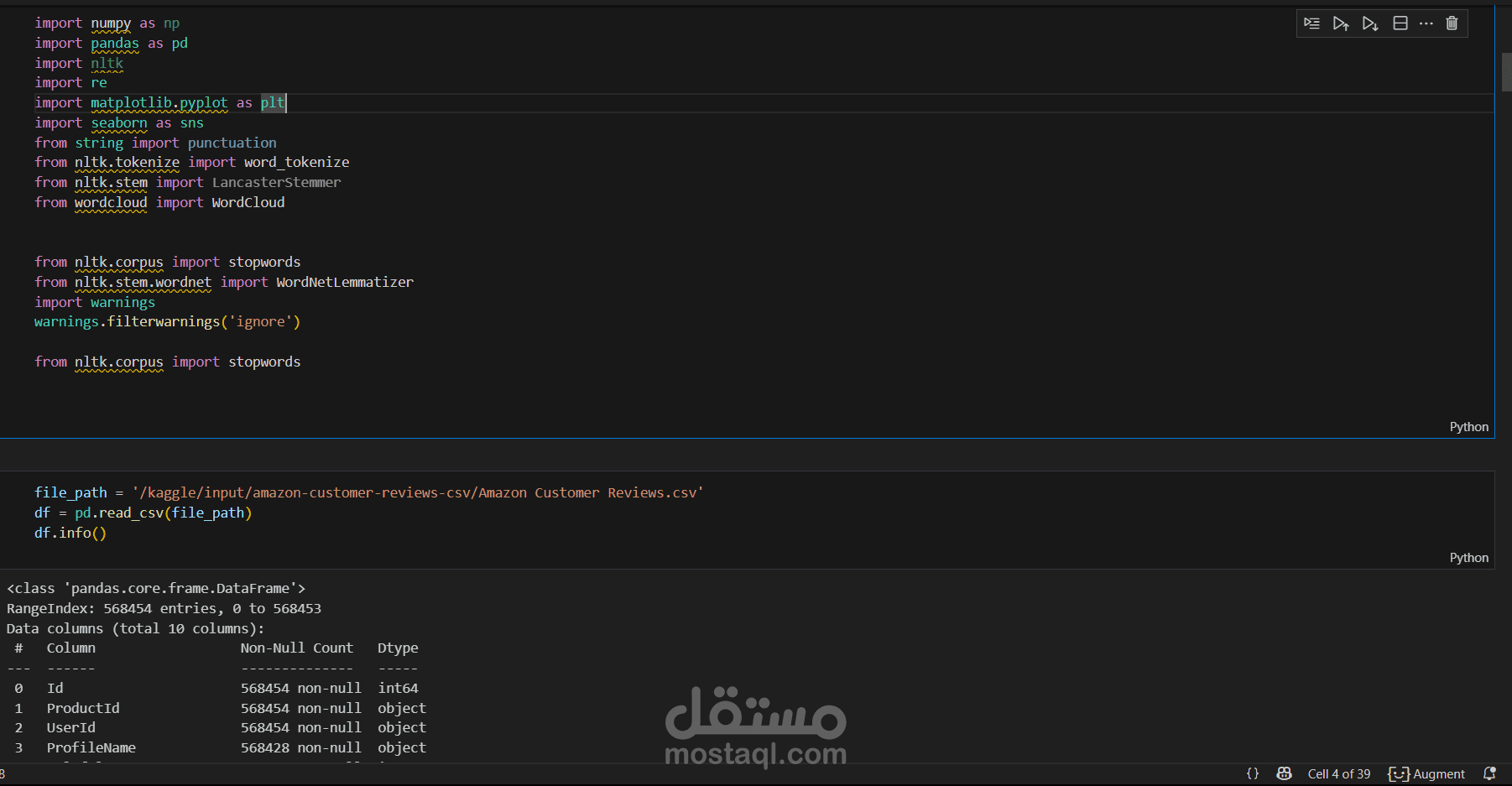
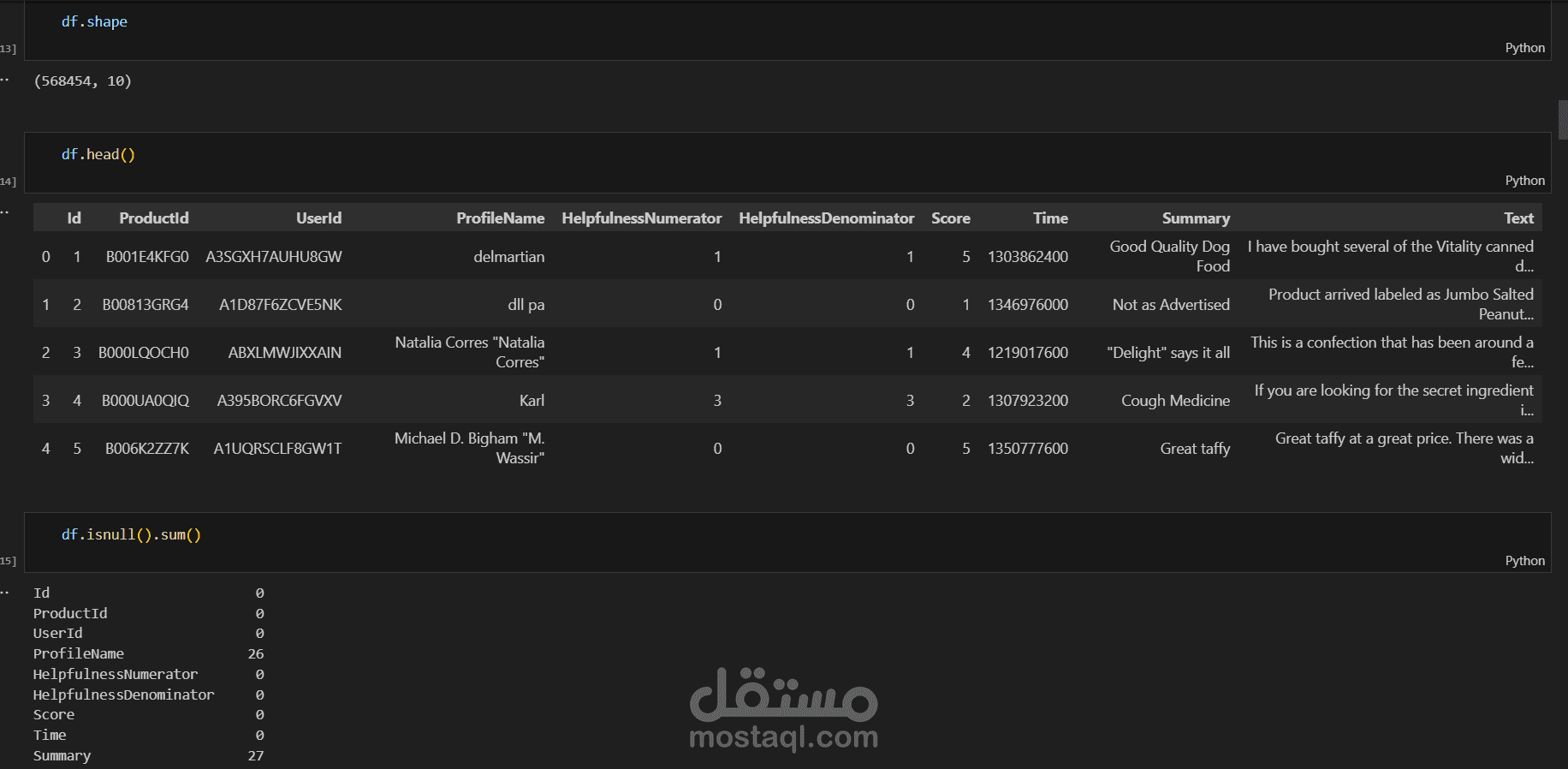
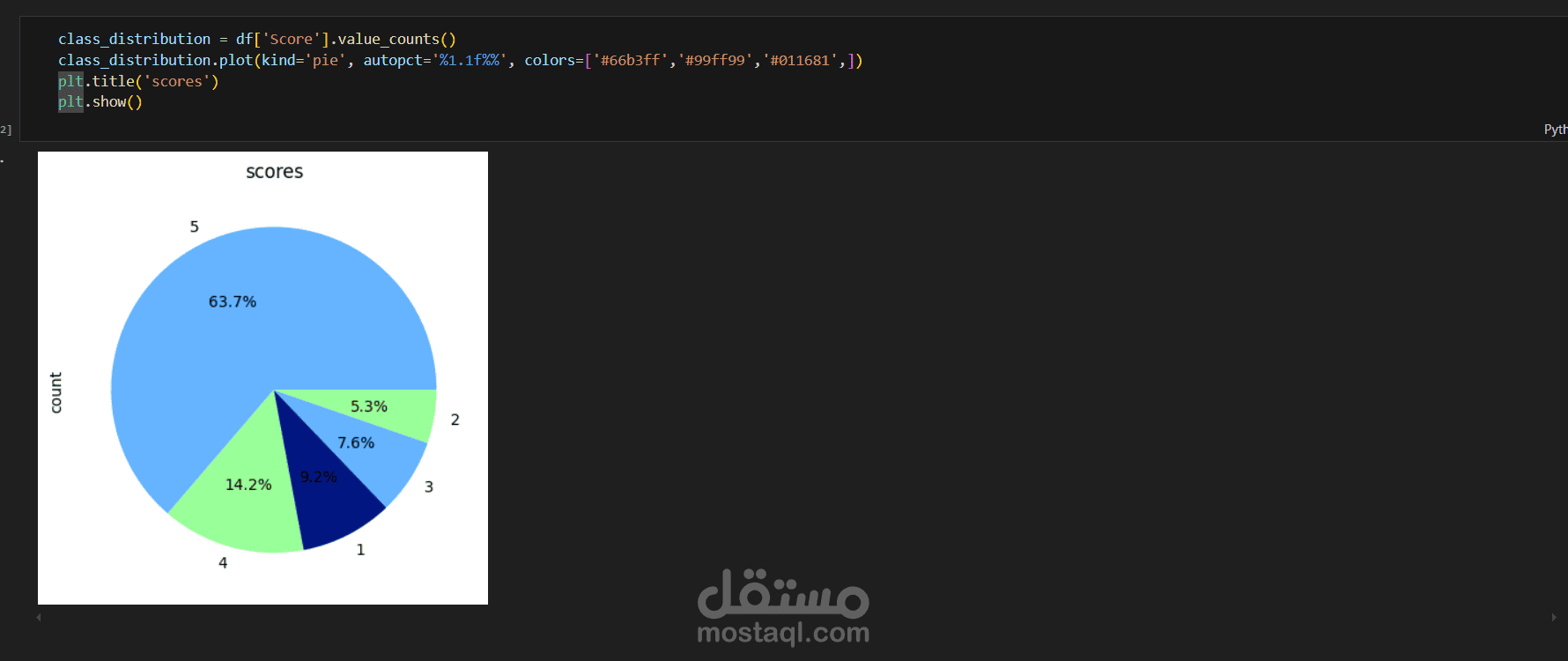
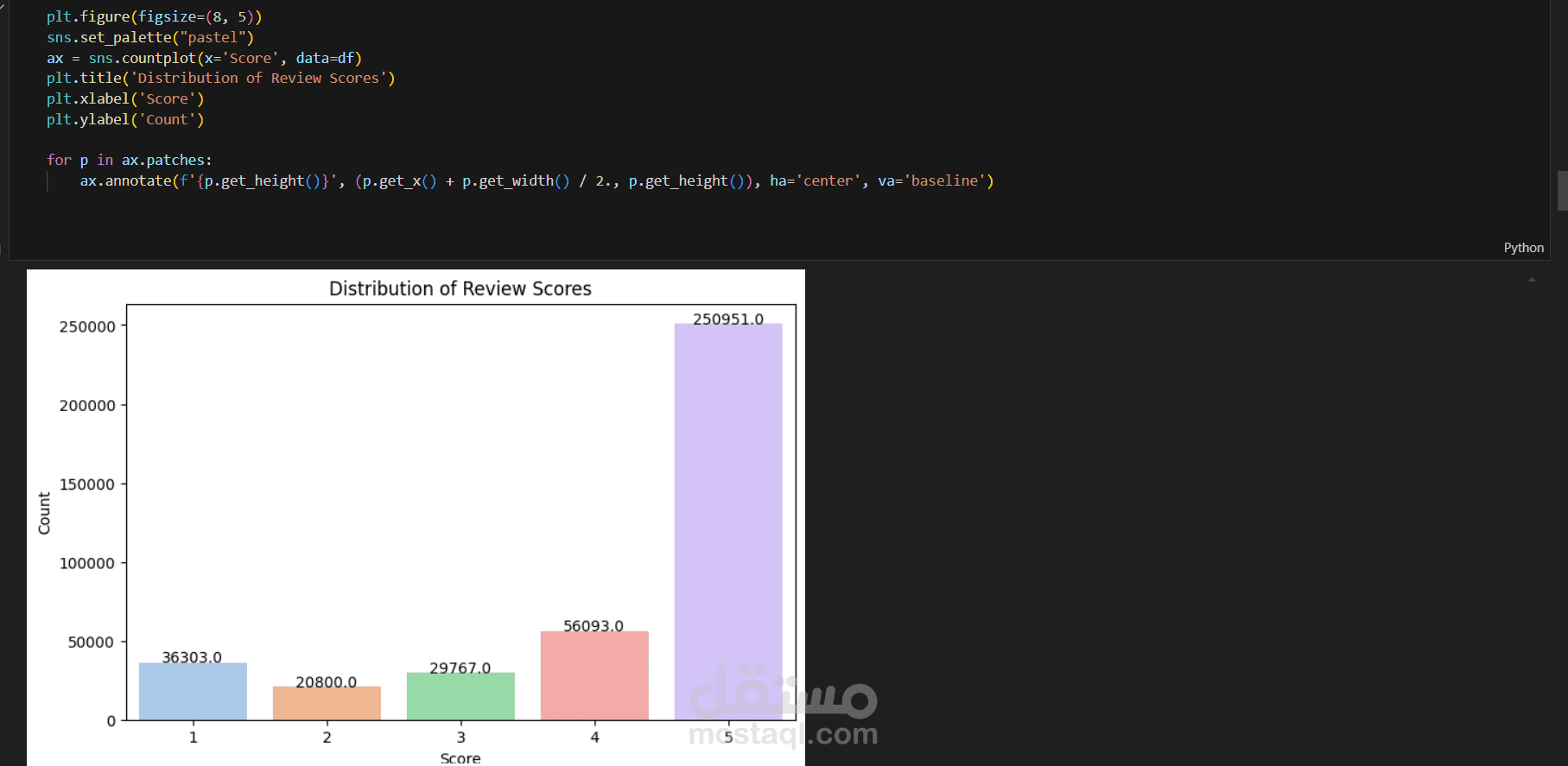
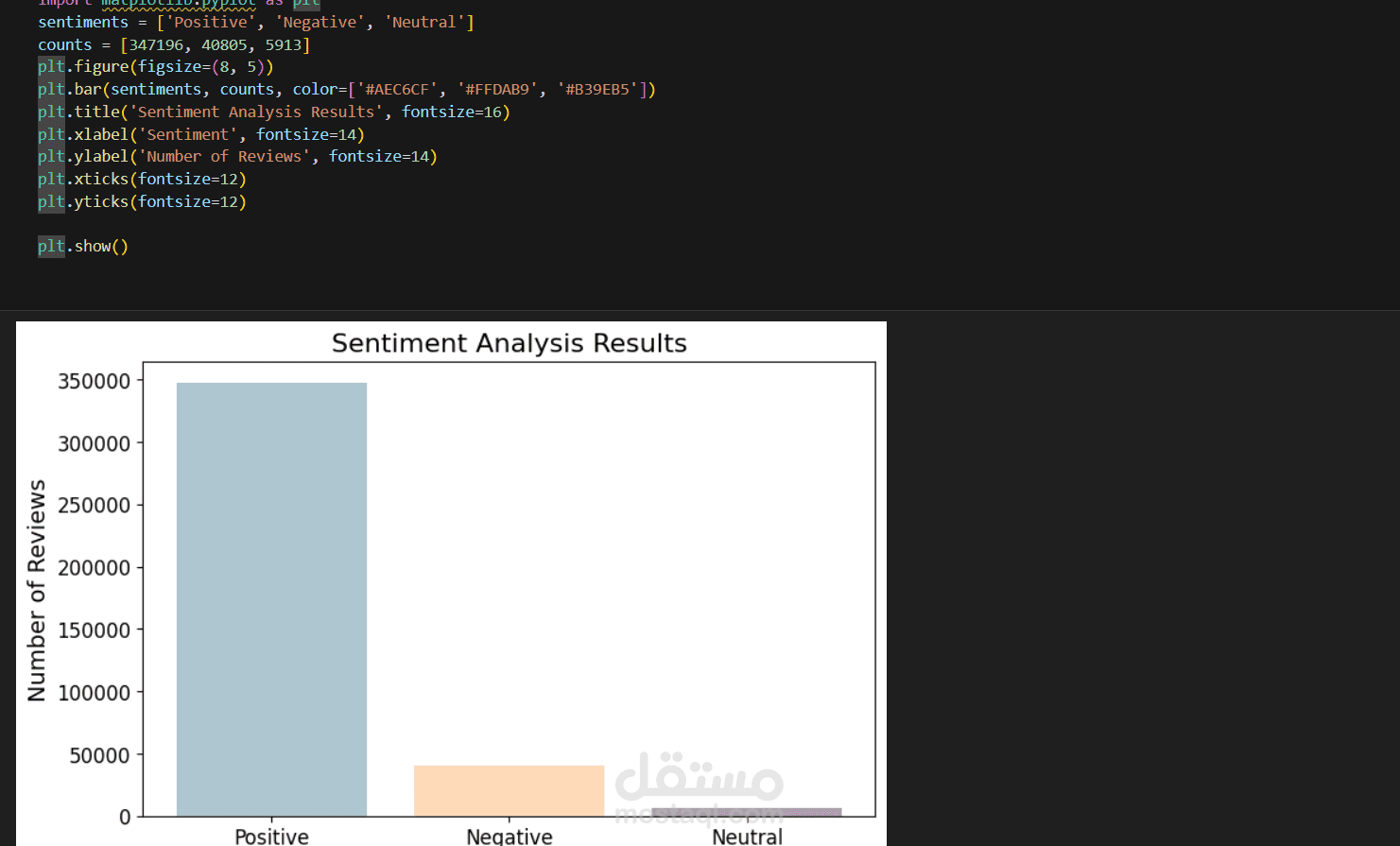
Sentiment analysis in Natural Language Processing (NLP) is the process of determining the emotional tone behind a piece of text. It’s often used to gauge public sentiment and opinions in customer reviews, social media, and other text data. Here's a high-level overview:
Text Preprocessing: This involves cleaning the text data by removing noise such as punctuation, special characters, and stop words. Techniques like tokenization, stemming, and lemmatization are applied to prepare the text for analysis.
Feature Extraction: Key features are extracted from the text using methods like bag-of-words, term frequency-inverse document frequency (TF-IDF), and word embeddings (e.g., Word2Vec, GloVe, BERT).
Sentiment Classification: The cleaned and processed text data is then classified into different sentiment categories (e.g., positive, negative, neutral). This can be done using machine learning algorithms (e.g., Naive Bayes, SVM, logistic regression) or deep learning models (e.g., LSTM, CNN, transformers).
Evaluation: The model's performance is assessed using metrics like accuracy, precision, recall, and F1-score. Cross-validation and confusion matrices are also used to ensure the robustness of the model.
Application: The sentiment analysis results can be used to improve products, services, marketing strategies, and customer support by understanding customer feedback and opinions