e-commerce web scraping (python)
تفاصيل العمل
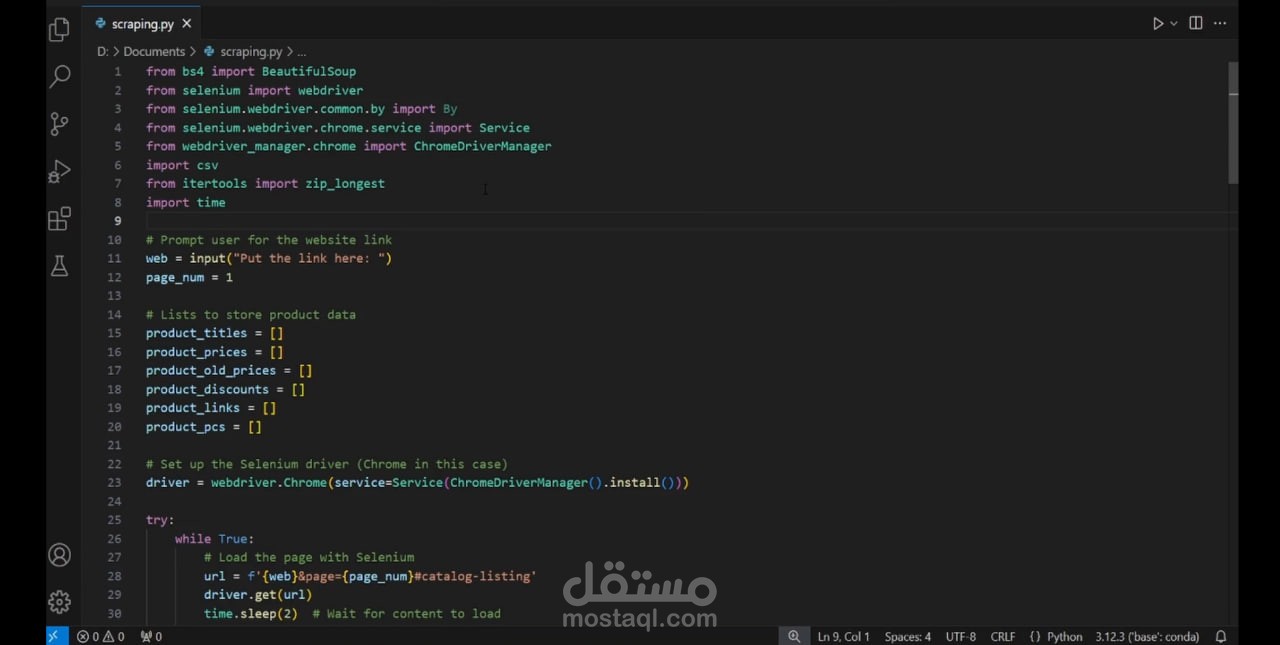
In the ever-evolving world of e-commerce, data is king. Recently, I embarked on a fascinating journey to scrape product data from Jumia, one of Africa's leading online marketplaces. Here's a detailed look into the process and the technologies that made it possible.
Technologies Used:
• Python: The backbone of our project.
• BeautifulSoup: For parsing HTML and XML documents.
• Selenium: To automate web browser interaction.
• CSV Module: For saving the scraped data.
• WebDriver Manager: To manage browser drivers seamlessly.
Project Overview:
The goal was to extract detailed product information, including titles, prices, discounts, pieces and links for multiple products.
1. User Input: Prompted the user to input the website link to scrape.
2. Data Storage: Initialized lists to store product data such as titles, prices, old prices, discounts, links and pcs.
3. Selenium Setup: Configured the Selenium WebDriver for Chrome to automate the browsing process.
4. Scraping Loop: Implemented a loop to continuously scrape data from each page until the user decides to stop.
5. Data Extraction: Used BeautifulSoup to parse the HTML content and extract product details.
6. Pagination Handling: Prompted the user for the next page number or to stop scraping.
7. Additional Details: Scraped further details from individual product links.
8. Data Export: Saved the collected data into a CSV file for further analysis.
? Key Challenges and Solutions:
• Dynamic Content Loading: Handled by adding delays (time.sleep) to ensure content is fully loaded before scraping.
• Error Handling: Implemented try-except blocks to manage missing data gracefully.
• Pagination: Allowed user input to navigate through multiple pages, ensuring comprehensive data collection.
• Scraping pcs: Made by using product links and scraping inner pages.
Impact and Applications:
This project not only enhanced my skills in web scraping and data handling but also provided valuable insights into the e-commerce landscape.
The data collected can be used for:
• Market Analysis: Understanding pricing strategies and discount patterns.
• Competitor Analysis: Comparing product offerings and pricing with competitors.
• Customer Insights: Identifying popular products and trends.
Conclusion:
Web scraping is a powerful tool for extracting valuable data from websites. This project is a testament to the potential of Python and its libraries in automating data collection and analysis. I'm excited to apply these insights to drive data-driven decisions in the e-commerce space.