Literature Review
تفاصيل العمل
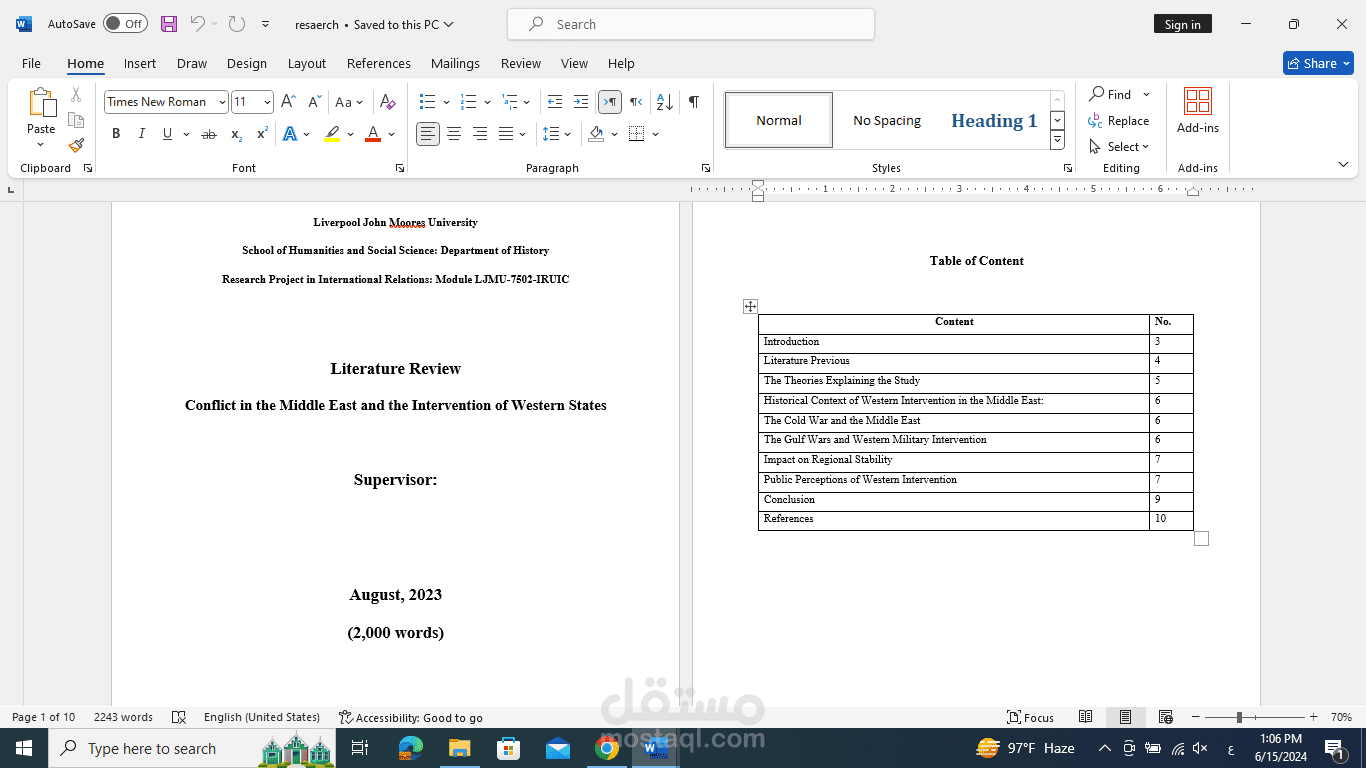
Conflict in the Middle East and the Intervention of Western States
This literature review aims to explore and analyze the role of Western states' intervention in the conflicts of the Middle East.
The problem of researching conflicts in the Middle East is multifaceted and complex, involving several factors that influence the situation in the region. Some of the key factors include its historical context, where certain conflicts in the Middle East can be traced back to long periods in history, encompassing nationalist, religious, tribal, and regional disputes. These conflicts may be deeply rooted and intricate, making finding lasting solutions challenging. Regional and major powers' involvement in the Middle East also plays a significant role due to their political and economic interests. Some regional countries might exploit local conflicts to advance their geopolitical objectives. Western states' intervention in the Middle East has sparked extensive debates. Some view it as contributing to stability and democracy, while others perceive it as driven by economic and political self-interests at the expense of local interests. The lack of permanent and sustainable political solutions to conflicts in the region leads to their recurrence, escalating tension and violence. This is one of the critical factors that prompt us to delve into this topic.
The main research question thus arises: To what extent do Western states intervene in conflicts in the Middle East?
To address this question, a descriptive and analytical approach will be adopted to highlight the role and intervention of Western states in conflicts and issues in the Middle East, attempting to clarify the resulting effects of such interventions.