ويب سايت
تفاصيل العمل
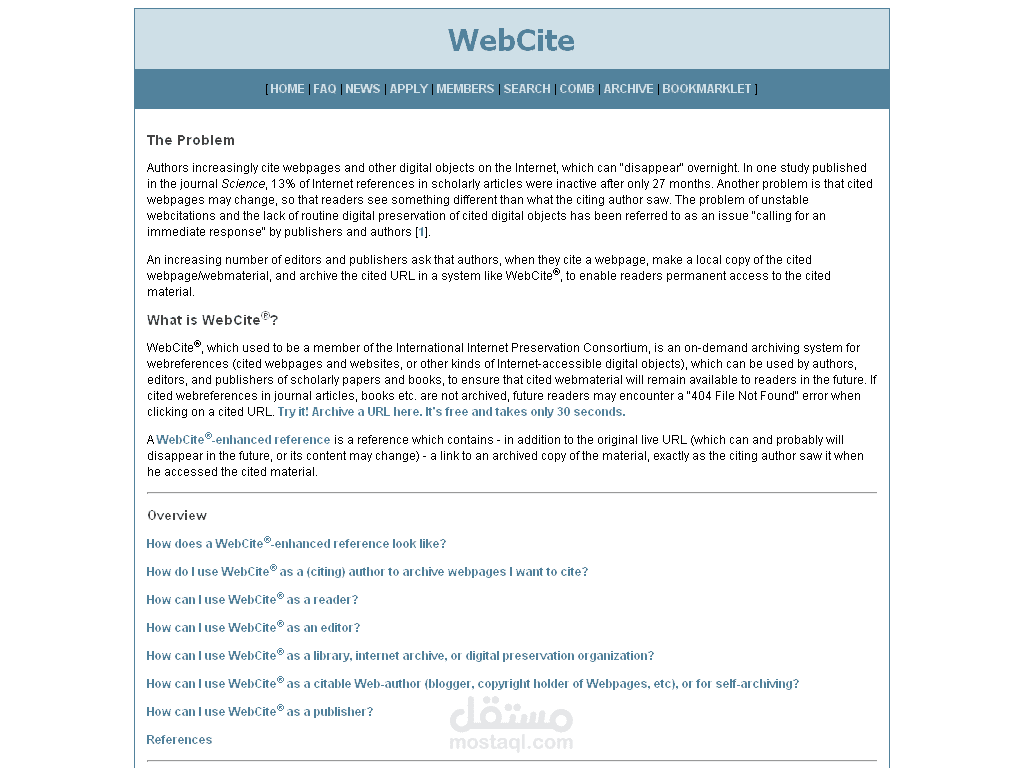
WebCite
[HOME| FAO NEWs APPLY | MEMBERS SEARCH| COMB ARCHIVE BOOKMARKLET)
The Problem
Authors increasingly cite webpages and other digital objects on the lnternet, which can "disappear overnight. In one study published
in the journal Science, 13% of Internet references in scholarly articles were inactive after only 27 months. Another problem is that cited
webpages may change, so that readers see something different than what the citing author saw. The problem of unstable
webcitations and the lack of routine digital presevation of cited digital objects has been referred to as an issue "calling for an
immediate response" by publishers and authors [1].
An increasing number of editors and publishers ask that authors, when they cite a webpage, make a local copy of the cited
webpagewebmaterial, and archive the cited URL in a system like WebCite, to enable readers permanent access to the cited
material.
What is WebCite?
WebCite which used to be a memnber of the International Internet Preservation Consortium, is an on-demand archiving system for
webreferences (cited webpages and websites, or other kinds of Internetaccessible digital objects), which can be used by authors,
editors, and publishers of scholarly papers and books, to ensure that cited webmaterial will remain available to readers in the future. If
cited webreferences in journal articles, books etc. are not archived, future readers may encounter a "404 File Not Found" error when
clicking on a cited URL. TIy it: Archive a URL here. It's free and takes only 30 seconds.
AWebCite"-enhanced reference is a reference which contains - in addition to the original live URL (which can and probably wilI
disappear in the future, or its content may change)- a link to an archived copy of the material, exactly as the citing author saw it when
he accessed the cited material.
Overview
How does a WebCite-enhanced reference look like?
How do Iuse WebCite as a (citing) author to archive webpages I want to cite?
How can Iuse
WebCite as a reader?
How can I use WebCite as an editor?
How canl use WebCite asa library, internet ar chive, or digital preservation organization?
How can l use WebCiteas a citable Web-author (blogger, copyriglht holder of Welbpages, etc), or for self-arclhiving?
How can l use WebCite as a publisher?
References
ترجمه الي اللغه العربيه و الفرنسيه
**ترجمة إلى اللغة العربية:**
WebCite
[الصفحة الرئيسية| أخبار الفاو | التقديم | البحث عن الأعضاء | الأرشيف المشترك | الإشارة المرجعية]
المشكلة
يُقتبس الكتّاب بشكل متزايد صفحات الويب وغيرها من الكائنات الرقمية على الإنترنت، التي قد "تختفي في ليلة وضحاها". في دراسة نشرت في مجلة العلوم، كان 13% من الإشارات على الإنترنت في المقالات العلمية غير نشطة بعد 27 شهرًا فقط. مشكلة أخرى هي أن صفحات الويب المُقتبسة قد تتغير، بحيث يرى القراء شيئًا مختلفًا عما رآه الكاتب المُقتبس. وقد وُصفت مشكلة الاستشهادات الرقمية الغير مستقرة ونقص الحفظ الرقمي المعتاد للكائنات الرقمية المُقتبسة على أنها مشكلة "تتطلب استجابة فورية" من قبل الناشرين والكتّاب.
عدد متزايد من المحررين والناشرين يطلبون من الكتّاب، عند الاستشهاد بصفحة ويب، أن يقوموا بنسخ محلية من الصفحة المُستشهد بها وأرشفة الرابط المُستشهد به في نظام مثل WebCite، لتمكين القراء من الوصول الدائم إلى المواد المُستشهد بها.
ما هو WebCite؟
WebCite، التي كانت عضوًا في التحالف الدولي لحفظ الإنترنت، هي نظام أرشفة حسب الطلب للمراجع على الويب (صفحات الويب والمواقع، أو أنواع أخرى من الكائنات الرقمية المتاحة على الإنترنت)، والتي يمكن استخدامها من قبل الكتاب والمحررين والناشرين للأوراق العلمية والكتب، لضمان بقاء المواد المُستشهد بها على الويب متاحة للقراء في المستقبل. إذا لم تُرشف المراجع المستشهد بها في المقالات العلمية والكتب وما إلى ذلك، فقد يواجه القراء المستقبلين خطأ "404 - الملف غير موجود" عند النقر فوق رابط URL مُستشهد به. جربها: قم بأرشفة رابط هنا. إنه مجاني ويستغرق فقط 30 ثانية.
المرجع المُحسّن بواسطة WebCite هو مرجع يحتوي - بالإضافة إلى الرابط الأصلي الحي (الذي قد يختفي في المستقبل، أو قد تتغير محتوياته) - على رابط لنسخة مؤرشفة من المواد، بالضبط كما رأى الكاتب المُستشهد بها عندما وصل إلى المادة المستشهد بها.
**Traduction en français :**
WebCite
[ACCUEIL| NOUVELLES DE LA FAO | DEMANDE | RECHERCHE DE MEMBRES | ARCHIVE COMMUNE | SIGNET]
Le Problème
Les auteurs citent de plus en plus des pages Web et d'autres objets numériques sur Internet, qui peuvent "disparaître du jour au lendemain". Dans une étude publiée dans la revue Science, 13 % des références Internet dans des articles savants étaient inactives après seulement 27 mois. Un autre problème est que les pages Web citées peuvent changer, de sorte que les lecteurs voient quelque chose de différent de ce que l'auteur citant a vu. Le problème des citations Web instables et le manque de préservation numérique systématique des objets numériques cités ont été qualifiés de problème "exigeant une réponse immédiate" par les éditeurs et les auteurs.
Un nombre croissant d'éditeurs et de rédacteurs en chef demandent aux auteurs, lorsqu'ils citent une page Web, de faire une copie locale de la page Web citée et d'archiver l'URL citée dans un système comme WebCite, pour permettre aux lecteurs d'accéder de manière permanente au matériel cité.
Qu'est-ce que WebCite ?
WebCite, qui faisait autrefois partie du Consortium international pour la préservation de l'Internet, est un système d'archivage à la demande pour les références Web (pages Web citées et sites Web, ou autres types d'objets numériques accessibles sur Internet), qui peut être utilisé par les auteurs, les éditeurs et les éditeurs de documents savants et de livres, pour s'assurer que le matériel Web cité restera disponible pour les lecteurs à l'avenir. Si les références Web