The Hamas-Israel War: What You Need to Know
تفاصيل العمل
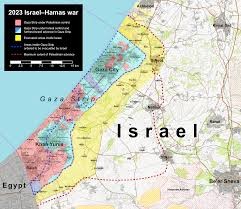
**Gaza and Israel: A Year of Conflict and the Challenges of Reconstruction**
The Gaza and Israel region has experienced a significant escalation in conflict over the past year, beginning with the Hamas attack on October 7, 2023, and the subsequent large-scale Israeli responses. This has led to widespread destruction in Gaza and profound effects on the lives of both Palestinians and Israelis. This article aims to review the current situation, highlight the humanitarian and political challenges, and provide an analysis of key events.
**Key Events and Their Impacts:**
* **October 7 Attack:** On October 7, 2023, Hamas launched a surprise cross-border attack on southern Israel, resulting in numerous Israeli casualties and hostages. This attack had a devastating impact on Israel and led to a strong military response.
* **Israeli Response:** In response to the Hamas attack, Israel launched a large-scale military campaign on the Gaza Strip, including airstrikes and artillery shelling, resulting in widespread destruction of infrastructure and residential buildings. This has caused the displacement of approximately 90% of Gaza's population.
* **Humanitarian Situation:** The conflict has exacerbated the humanitarian crisis in Gaza, with residents facing severe shortages of food, water, medicine, and basic services. **88% of educational facilities have been damaged or destroyed**, making temporary tent schools necessary. Health facilities have also been severely affected, making it more difficult to provide necessary medical care.
* **Trump's Proposal:** Former U.S. President Donald Trump proposed a plan to expel Palestinians from Gaza, with the U.S. taking over the territory and rebuilding it for others. This proposal has been met with dismay by Palestinians, who reject the plan. Palestinians view this proposal as a repeat of what happened in 1948 when large numbers of them were displaced.
* **Ceasefire:** A temporary truce was reached between Israel and Hamas, allowing humanitarian aid to flow into Gaza and the exchange of some hostages and prisoners. However, this truce remains fragile and does not guarantee a complete cessation of hostilities.
* **Impact on Palestinians:** Palestinians face harsh conditions, fearing a repeat of the 1948 mass expulsion. They reject any attempts to displace them from Gaza. Approximately 1.9 million Palestinians, about 90% of the population, have been displaced due to the war.
* **Impact of the War on Israel**: A year after the attack, Israelis are still grappling with the trauma and aftermath of the October 7th attack. Reports indicate that war has become part of daily life and the national mood in Israel. There has also been an increase in antisemitic attacks in Australia.
* **Educational Disruption**: The war has complicated the educational situation in universities, with students feeling concerned about freedom of speech.
**Future Challenges:**
* **Reconstruction:** The Gaza Strip faces enormous reconstruction challenges, with widespread destruction that will take a long time and significant effort to repair. It is estimated that rebuilding Gaza could take decades.
* **Political Situation:** The political situation in the region remains complex, with ongoing disputes between Israel, Hamas, and other Palestinian factions. Trump's plan to displace Palestinians from Gaza is controversial and faces widespread opposition.
* **Humanitarian Aid:** There is a continuous need for humanitarian aid to be provided to the residents of Gaza to meet their basic needs and provide essential services.
* **Negotiations:** Negotiations between the conflicting parties remain complex, as each side seeks to advance their own interests.
* **Two-State Solution:** The two-state solution remains the most widely accepted solution by the international community, but there are significant challenges in implementing it on the ground.
**Reconstruction Plans:**
* **Hamas Plan:** Hamas has unveiled a plan for the reconstruction of Gaza, including short, medium, and long-term plans, with a focus on housing, transportation, the economy, and health care. The plan proposes the creation of temporary housing areas near hospitals and clean water sources. It also includes plans to improve medical infrastructure, including the establishment of trauma support facilities and underground storage. There are also ideas for the creation of underground tunnels to connect cities.
* **Funding Challenges:** Funding remains one of the biggest challenges facing reconstruction plans, as significant funds are needed to cover the costs of rebuilding infrastructure and residential buildings.
**Conclusion:**
The situation in Gaza and Israel presents a significant challenge for the international community, as there is a need for significant efforts to end the conflict and provide sustainable solutions. These efforts include providing humanitarian aid, supporting the reconstruction process, resuming negotiations, and working towards achieving a two-state solution. **Achieving peace and stability in the region requires strong political will and broad international cooperation.**
**Note:** It should be kept in mind that the situation in Gaza and Israel is volatile, and events are developing rapidly. Therefore, news and developments should be followed continuously.