Published Research Paper at Scopus Indexed Journals: Creating Educational Content to Prepare Jordanian Children for Future Challenges
تفاصيل العمل
Abstract
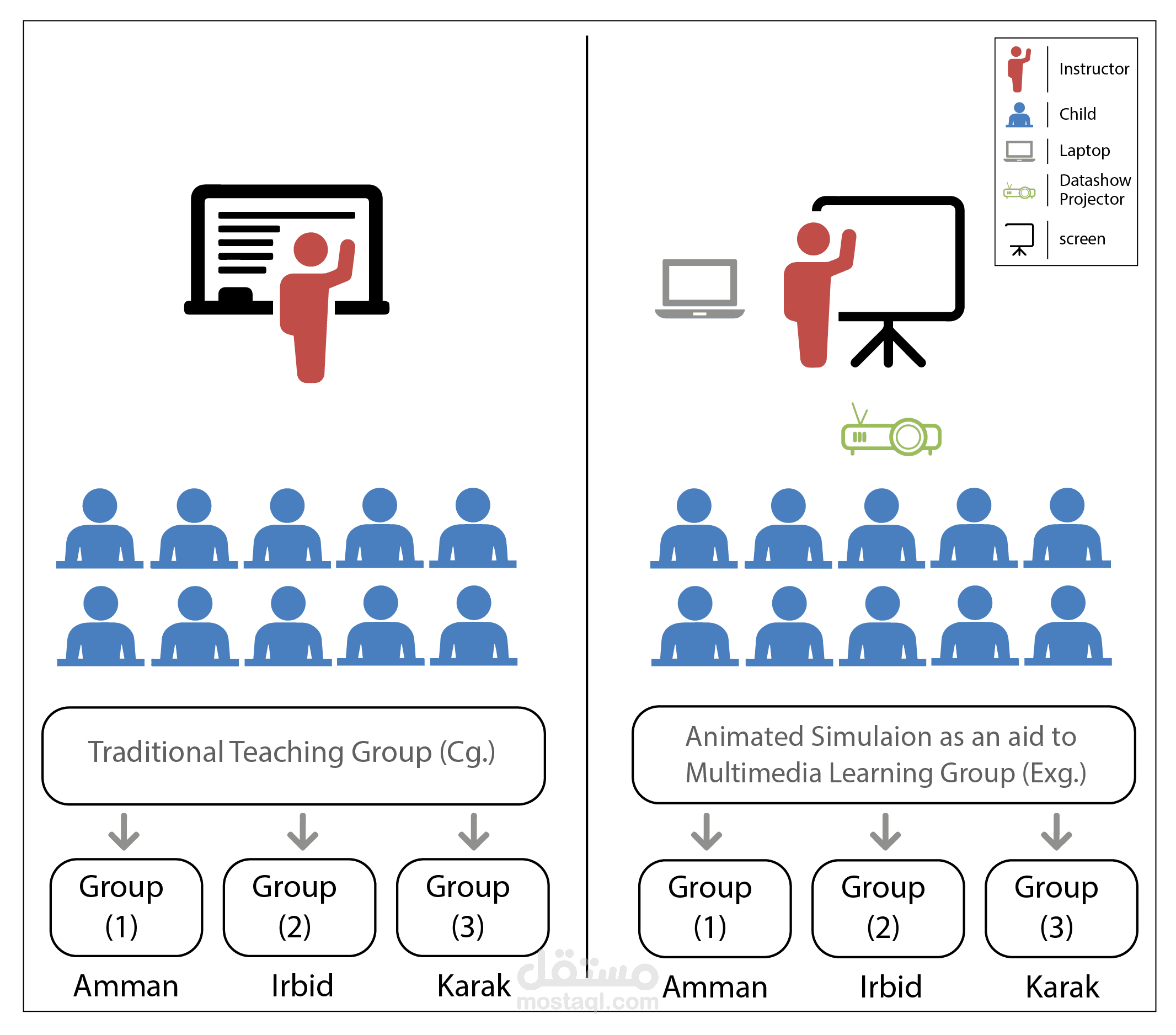
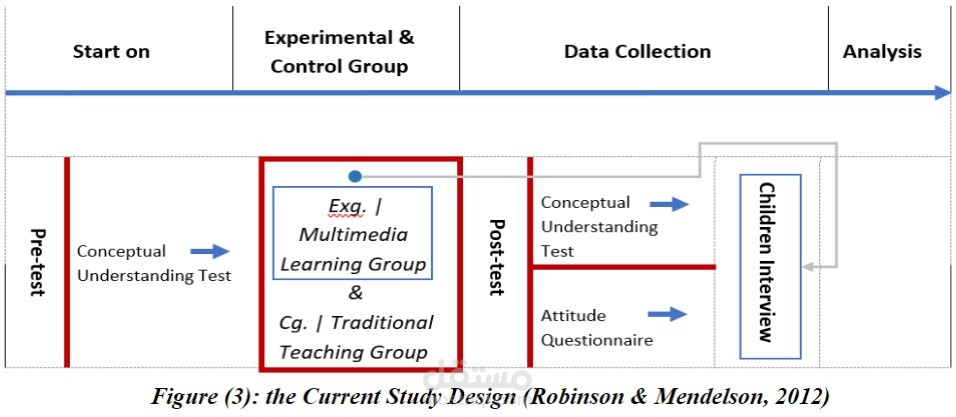
The objective of this study is to investigate the effectiveness of creating and using an educational animated video on Jordanian children’s conceptual understanding of and attitude towards the roles and functions of future innovations in human society. Mayer’s principles of the Cognitive Theory of Multimedia Learning (CTML) guide the design and development of the animated video and the intervention. The participants are 112 children in age 10 to 11 years old from three different districts of Jordan. The study uses a qualitative experiment design. The children were separated into experimental groups and control groups to investigate two different pedagogical environments. The first experimental group uses animated video within Multimedia Learning intervention. The second control group uses the Traditional Teaching method. To measure the intervention’s effects, the study uses pre- and post-conceptual understanding test and post-attitude questionnaires. To find out more about the experiences with using the animated video within Multimedia Learning intervention, a sub-sample of children were interviewed. The findings of the study reveal that creating and using animation have a statistically significant effect, at the 0.05 level, on children’s conceptual understanding of future innovations and future challenges. Their attitudes towards learning about the future innovations are positive.