Raspberry PI Research
تفاصيل العمل
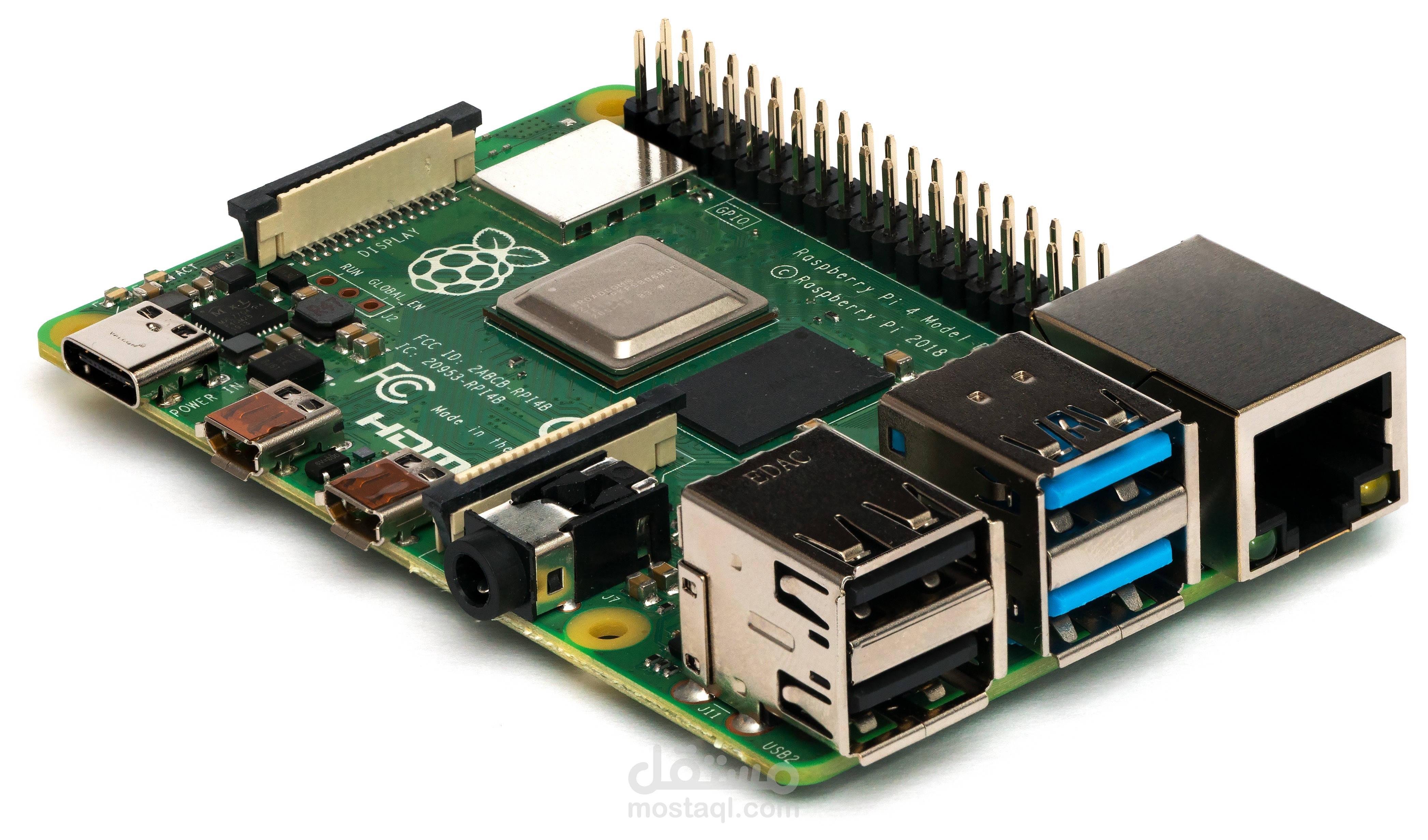
RPI, or the Raspberry Pi, is a popular single-board computer that has gained significant popularity since its introduction in 2012. Developed by the Raspberry Pi Foundation, the Raspberry Pi was designed to promote basic computer science education and to provide an affordable platform for learning programming and tinkering with electronics.
The Raspberry Pi boards are small in size, about the size of a credit card, and they are available at a relatively low cost. Despite their compact size, Raspberry Pi boards are equipped with a range of components, including a processor, memory, USB ports, HDMI ports, Ethernet connectivity, and GPIO (General Purpose Input/Output) pins that allow for the connection of various sensors, modules, and other hardware.
One of the key features of the Raspberry Pi is its versatility. It runs on a Linux-based operating system (usually Raspbian, a version of Debian), and users have the flexibility to install a wide range of software and applications. This flexibility enables various use cases for the Raspberry Pi, such as a media center, a home automation hub, a retro gaming console, a weather station, a robotics controller, and much more. The Raspberry Pi also has a vibrant and active community of users who regularly share their projects, ideas, and tutorials online.
Over the years, the Raspberry Pi has evolved, with new models being released with improved specifications and capabilities. These newer models have more powerful processors, increased memory, faster connectivity options, and improved graphics capabilities. This evolution has made the Raspberry Pi suitable for a broader range of applications, including more demanding tasks like machine learning and artificial intelligence.
The educational impact of the Raspberry Pi cannot be overstated. It has provided an accessible platform for students, hobbyists, and professionals to learn about computer programming, electronics, and physical computing. Its affordability and wide availability have made it an attractive tool for educational institutions, particularly in developing countries where resources may be limited.
Overall, the Raspberry Pi has become an iconic device in the world of technology, inspiring innovation and creativity. Its combination of affordability, versatility, and community support has made it a popular choice for projects ranging from simple DIY experiments to complex, real-world applications.