ذوب طاقتك
تفاصيل العمل
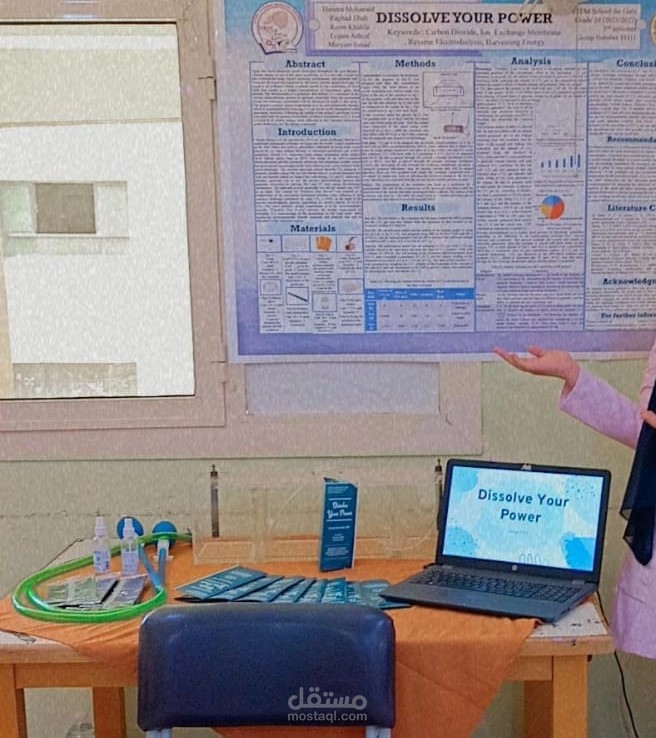
Egypt has faced numerous grand challenges throughout the past decades. Climate change is one of the most significant, as it is not only a local but also a worldwide issue. Egypt's economy, environment, and residents' well being are all negatively impacted by this crisis. Another grand challenge of Egypt is air pollution, which is caused mostly by the combustion of fossil fuels that results in a higher concentration of Greenhouse gases than normal. The development of a prototype that utilizes CO2 emissions in the reverse electrodialysis process to generate electricity from ion movement across ion-exchange membranes will be discussed in depth in this poster. The project's primary design requirement is to be environmentally friendly, which is accomplished by lowering CO2 gas levels in the atmosphere while generating electricity. Following the testing of the project's prototype, it was concluded that the process successfully produces a maximum of (6.2) A and (13.02)w∙h of electric energy while adhering to the Capstone restrictions, grand challenges, and the design requirement.
واجهت مصر العديد من التحديات الكبرى خلال العقود الماضية. يعد تغير المناخ أحد أهمها ، لأنه ليس محليًا فحسب ، بل هو أيضًا أيضا قضية عالمية. تأثر الاقتصاد والبيئة ورفاهية السكان في مصر سلبًا بهذه الأزمة. التحدي الكبير الآخر مصر هي تلوث الهواء ، والذي ينتج في الغالب عن احتراق الأحافير الوقود الذي ينتج عنه تركيز أعلى من غازات الاحتباس الحراري من طبيعي. تطوير نموذج أولي يستخدم ثاني أكسيد الكربون
الانبعاثات في عملية الديال الكهربائي العكسي لتوليد الكهرباء من حركة الأيونات عبر أغشية التبادل الأيوني سيتم مناقشتها بعمق في هذا الملصق. شرط التصميم الأساسي للمشروع هو أن يكون صديقًا للبيئة ، والذي يتم تحقيقه عن طريق خفض مستويات غاز ثاني أكسيد الكربون في الغلاف الجوي أثناء توليد الكهرباء ، وبعد اختبار النموذج الأولي للمشروع ، كان خلص إلى أن العملية تنتج بنجاح بحد أقصى (6.2) أ و (13.02) واط ساعة من الطاقة الكهربائية مع الالتزام بقيود كابستون ، التحديات الكبرى ومتطلبات التصميم.