دورة حياة الخوارزمية الذكية
تفاصيل العمل
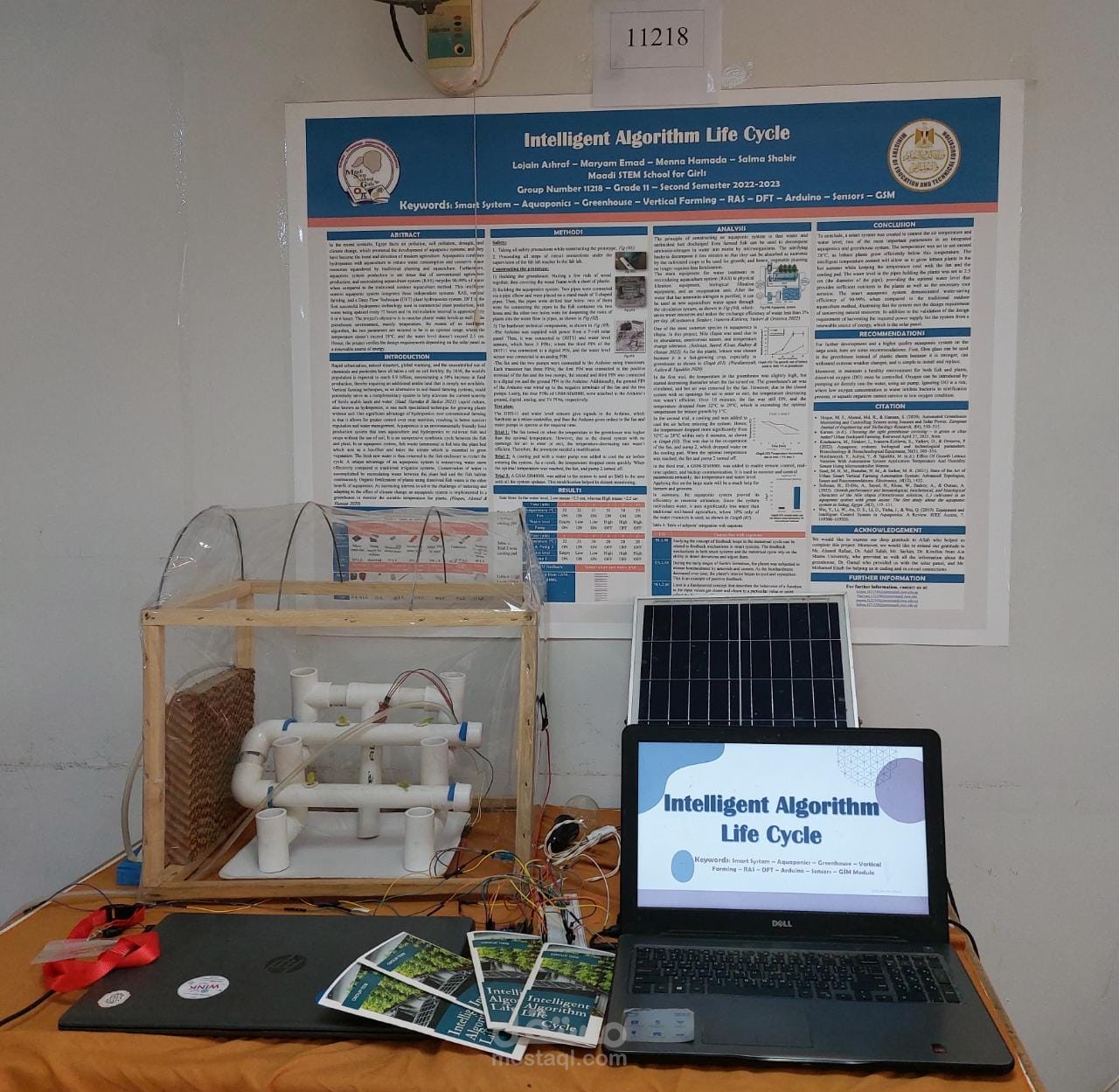
In the recent scenario, Egypt faces air pollution, soil pollution, drought, and climate change, which promoted the development of aquaponic systems, and they have become the trend and direction of modern agriculture. Aquaponics combines hydroponics with aquaculture to reduce water consumption and conserve water resources squandered by traditional planting and aquaculture. Furthermore, aquaponic system production is ten times that of conventional agriculture production, and recirculating aquaculture system (RAS) recycles 90-99% of water when compared to the traditional outdoor aquaculture method. This intelligent control aquaponic system integrates three independent systems: RAS, vertical farming, and a Deep Flow Technique (DFT) plant hydroponics system. DFT is the first successful hydroponic technology used in commercial plant production, with water being updated every 72 hours and its recirculation interval is approximately 4 or 6 hours. The project's objective is to monitor plants' water levels as well as the greenhouse environment, mainly temperature. By means of an intelligent algorithm, the two parameters are ensured to be in an optimal range, where the temperature doesn’t exceed 28°C, and the water level doesn’t exceed 2.5 cm. Hence, the project verifies the design requirements depending on the solar panel as a renewable source of energy.
في السيناريو الأخير ، تواجه مصر تلوث الهواء ، وتلوث التربة ، والجفاف ، والتغير المناخي ، مما أدى إلى تطوير أنظمة الزراعة المائية ، وأصبحت اتجاه واتجاه الزراعة الحديثة. تجمع Aquaponics بين الزراعة المائية وتربية الأحياء المائية لتقليل استهلاك المياه والحفاظ على الموارد المائية التي تبددها الزراعة التقليدية وتربية الأحياء المائية. علاوة على ذلك ، يبلغ إنتاج نظام الاستزراع المائي عشرة أضعاف الإنتاج الزراعي التقليدي ، كما أن نظام الاستزراع المائي المعاد تدويره (RAS) يعيد تدوير 90-99٪ من المياه بالمقارنة مع طريقة الاستزراع المائي التقليدية في الهواء الطلق. يدمج نظام aquaponic للتحكم الذكي هذا ثلاثة أنظمة مستقلة: RAS ، والزراعة العمودية ، ونظام الزراعة المائية في النباتات بتقنية التدفق العميق (DFT). DFT هي أول تقنية زراعة مائية ناجحة تُستخدم في إنتاج المصانع التجارية ، حيث يتم تحديث المياه كل 72 ساعة ويبلغ الفاصل الزمني لإعادة تدويرها حوالي 4 أو 6 ساعات. يهدف المشروع إلى مراقبة مستويات المياه في النباتات وكذلك بيئة الدفيئة ، ودرجة الحرارة بشكل أساسي. من خلال خوارزمية ذكية ، يتم ضمان أن تكون المعلمتان في النطاق الأمثل ، حيث لا تتجاوز درجة الحرارة 28 درجة مئوية ، ولا يتجاوز مستوى الماء 2.5 سم. وبالتالي ، يتحقق المشروع من متطلبات التصميم اعتمادًا على الألواح الشمسية كمصدر متجدد للطاقة.