"Kaspersky EDR: Advanced Threat Detection and Incident Response for Secure Endpoints"
تفاصيل العمل
This is a technical article about some of the advantages and disadvantages of
"Kaspersky EDR: Advanced Threat Detection and Incident Response for Secure Endpoints"
Features of Kaspersky Endpoint Detection and Response
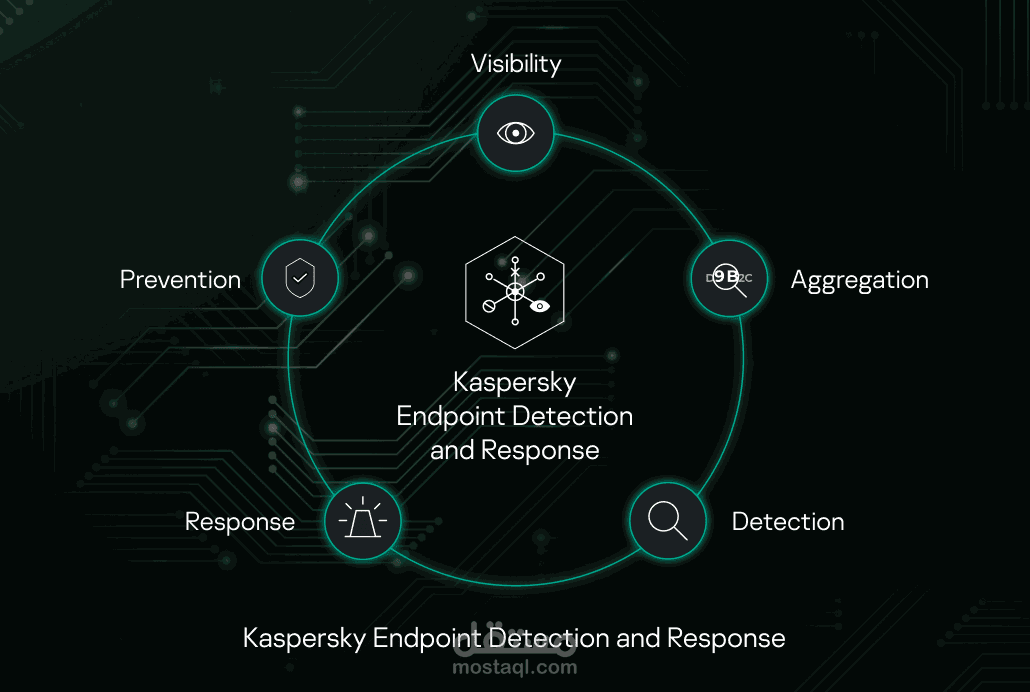
Kaspersky Endpoint Detection and Response (EDR) is a security solution that provides advanced threat detection and response capabilities for organizations. Some key features of Kaspersky EDR include:
Advanced threat detection: Kaspersky EDR uses multiple techniques, such as behavior-based detection, machine learning, and signature-based detection, to identify and block advanced threats.
Automated incident response: Kaspersky EDR includes built-in incident response capabilities that can automatically contain and neutralize threats, minimizing the impact of an attack.
Endpoint visibility and control: Kaspersky EDR provides detailed visibility into endpoint activity and allows administrators to control and manage endpoint security.
Integrated threat intelligence: Kaspersky EDR integrates with Kaspersky's global threat intelligence network, providing real-time updates on the latest threats and attack methods.
Cloud-based management: Kaspersky EDR can be managed through a cloud-based console, making it easy to deploy and manage security across a large number of endpoints.
Compliance and reporting: Kaspersky EDR includes compliance and reporting capabilities, making it easy to track security incidents and demonstrate compliance with regulations.
Overall, Kaspersky EDR is a robust security solution that provides advanced threat detection, incident response, and endpoint visibility capabilities. It is a good option for organizations looking to protect their endpoints from advanced threats.
Disadvantages of Kaspersky Endpoint Detection and Response
Kaspersky Endpoint Detection and Response (EDR) is a security solution that provides advanced threat detection and response capabilities for organizations. However, like any security solution, it also has some disadvantages that should be considered before implementing it:
Complexity: Kaspersky EDR is a complex security solution that may require specialized knowledge and expertise to set up and manage properly. This can be a disadvantage for organizations that lack the resources or expertise to manage it effectively.
High cost: Kaspersky EDR can be a costly solution, especially for organizations with a large number of endpoints to protect. This may make it difficult for small or budget-constrained organizations to afford.
False positives: Like any security solution that relies on threat detection, Kaspersky EDR may generate false positives, which can lead to unnecessary investigations and incident response actions.
Limited third-party integrations: Kaspersky EDR is primarily designed to integrate with other Kaspersky products, and may have limited integration options with third-party solutions.
Privacy concerns: Some users have raised concerns about Kaspersky's data collection and privacy practices, which may be a concern for organizations with strict data privacy requirements.
Geographical limitations: Kaspersky EDR is not available in certain countries like USA and Japan.
Overall, Kaspersky EDR is a robust security solution that provides advanced threat detection and response capabilities, but it has its own limitations. Organizations should consider these disadvantages when evaluating whether Kaspersky EDR is the right fit for their security needs.